Former Rocky Ford Mayor Duane Gurule Questions Drinking Water Quality, Infrastructure Funding and Arkansas Valley Conduit Plans
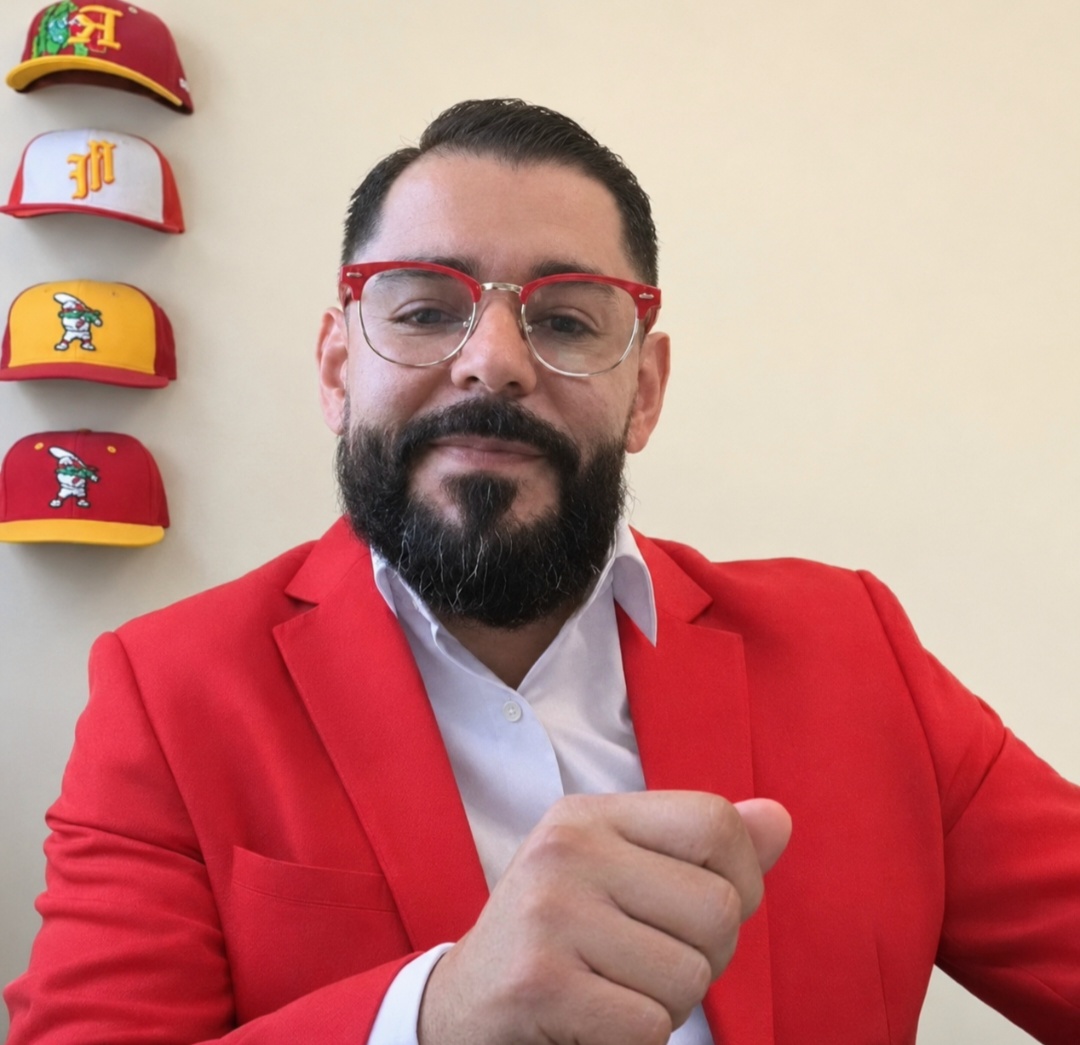
Description: Former Rocky Ford Mayor Duane Gurule raises concerns about uranium levels, water infrastructure, grant funding and the Arkansas Valley Conduit... Letters to the Editor Do Not Necessarily Reflect the Opinion of Consulting With A Hart LLC, SECO News or Our Advertising Affiliates...

Rocky Ford Deserves More Than Minimum Standards. It Deserves Better Water. And Leadership Willing to Do the Work.
Recently, Rocky Ford Public Works Director Rick Long published a statement about PFAS contamination and the City's drinking water. His argument was one I've heard for years. Our water meets state and federal standards.
But when did meeting minimum standards become the highest standard we're willing to achieve?
You don't need to be a certified water operator or scientist to understand why residents are concerned. Turn on your faucet. Fill a glass. Look at the mineral buildup around your sinks and showers. Talk to families spending their hard-earned money on bottled water and filtration systems because they don't trust what comes out of their faucets.
Mineral buildup doesn't necessarily mean water is unsafe, but it raises legitimate questions about quality. And residents deserve answers.
I reviewed Rocky Ford's drinking water quality reports covering 2023, 2024, and 2025. What I found raises some questions that I believe every resident should be asking.
In 2023, Rocky Ford reported an average uranium concentration of 15.67 parts per billion. That increased to 16.5 in 2024 and reached 20.65 in 2025.
That's nearly a 32% increase in average uranium concentrations over two years.
The federal maximum contaminant level for uranium is 30 parts per billion. But here's something I found particularly concerning.
In 2025, one of the City's four uranium samples measured 36.3 parts per billion, exceeding the numerical federal limit.
Now, the City reported no regulatory violation. An individual sample above the limit doesn't automatically establish a violation because compliance is determined using specific monitoring calculations. And these reports don't establish that Rocky Ford's water is unsafe.
But that doesn't mean we shouldn't be asking questions.
Why did uranium concentrations increase? What caused that individual sample to exceed 30 parts per billion? Which water source did it come from? Has additional testing been conducted? And what is the City's plan if these levels continue increasing?
The federal health-based goal for uranium in drinking water is zero.
I don't think it's unreasonable to expect our City leadership to explain why we're seeing these increases rather than simply reminding everyone that we're meeting standards.
And uranium isn't the only finding worth examining.
In 2023, Rocky Ford reported an average gross alpha radiation measurement of 17.74 picocuries per liter, above the numerical federal maximum of 15. The City reported no violation, and that average decreased significantly to 5.22 by 2025.
That's encouraging. But what caused the elevated readings in 2023? What changed?
The reports also show total trihalomethanes, which are byproducts of drinking water disinfection, increasing from 33.8 parts per billion in 2024 to 40.99 in 2025. That's an increase of more than 21% in one year. Those levels remain below the federal limit of 80, but the increase is worth understanding.
The reports also identify sodium at 100.5 parts per million from testing conducted in 2023. And while Rick's recent statement focuses on PFAS, the reports don't provide the numerical PFAS testing results needed for residents to independently evaluate those claims.
I'm not suggesting every increase means our water is dangerous. Some contaminants fluctuate, and three years of data aren't enough to establish what will happen next.
But when the City's own reports show these changes, I believe residents deserve more than a statement that everything is within regulatory limits.
They deserve an explanation of what's happening and what the City intends to do about it.
I've never believed compliance should be our ultimate goal. We should be working to improve water quality and the infrastructure delivering it. If that means advocating for stronger standards at the state level, I'm willing to help lead that conversation
During my time as mayor, one of our biggest challenges was Rocky Ford's aging water infrastructure. We were losing a substantial amount of treated water through our distribution system while facing millions of dollars in needed improvements.
These problems weren't going away, and they weren't getting cheaper.
Yet on multiple occasions, I heard Public Works Director Rick Long say, "I'm not a grant writer."
My response has always been the same.
Then find someone who is.
Nobody expects a Public Works Director to personally write every grant application. But I absolutely expect the person responsible for overseeing millions of dollars in public infrastructure to actively pursue funding opportunities and work with others to bring those resources into our community.
Neighboring communities are securing outside funding for their water projects. That doesn't happen without someone putting in the work.
In his recent statement, Rick explains why communities like La Junta qualify for PFAS funding that Rocky Ford doesn't.
Fine. Different programs have different eligibility requirements.
But PFAS isn't our only water infrastructure problem.
How many grants has Rocky Ford applied for to replace aging water mains? How much outside funding has been secured to address our distribution losses?
I haven't seen evidence that our Public Works Department has secured grant funding for those broader improvements. If it has, the City should make that information public.
And funding opportunities aren't limited to applications.
Recently, a Water Summit was hosted right here in Rocky Ford. From what I understand, our Public Works Director wasn't there.
During my time as mayor, I attended meetings hosted by USDA, CDPHE, and DOLA where agencies discussed funding opportunities for municipal water projects. On each occasion, our Public Works Director was absent.
I understand nobody can attend every meeting. I worked a full-time job while serving as mayor. But when water infrastructure is one of your community's biggest challenges, these opportunities should be a priority. If you can't attend, make sure someone qualified represents the City.
You have to show up and do the work.
That brings me to the Arkansas Valley Conduit.
I've been a strong supporter of the AVC because I see the long-term value of a centralized primary water treatment and delivery system serving communities throughout the Lower Arkansas Valley. I also see the value of redundancy, giving Rocky Ford another treated water supply and greater flexibility when our existing system needs maintenance or experiences problems, provided the City maintains backup capacity.
My strategy was to advocate for full funding of the AVC trunk line, then pursue full funding for the Group 2 and Group 3 infrastructure needed for Rocky Ford's participation.
I knew connecting to the AVC would require engineering, local infrastructure improvements, and significant financial planning. That's exactly why I wanted us pursuing every available funding opportunity.
During my tenure, Rick Long repeatedly opposed moving forward with the AVC. Councilmembers Martinez and Mullins also echoed his opposition.
I understand concerns about cost. I shared the responsibility of examining those costs while serving as mayor.
But here's the question I kept asking.
If the AVC isn't the solution, what's your better solution?
And after reviewing these three years of water quality reports, I think that question deserves even more attention.
What is the plan for Rocky Ford's drinking water over the next 20 or 30 years? How does that plan address uranium concentrations and other water quality concerns? What treatment options have been evaluated? What will they cost? And where will the money come from?
Would connecting to the AVC improve our long-term water quality? Has the City compared the quality and treatment requirements of AVC water with our existing sources?
These are questions that should be answered through engineering and water quality analysis, not assumptions.
I've heard plenty of reasons why we shouldn't move forward with the AVC. What I haven't seen is a detailed alternative presented to the public.
The AVC would require complicated technical work and coordination. I've questioned whether the City's resistance reflects concerns about its ability to manage that transition. That's my personal concern based on my experience, not something I can establish as anyone else's motivation.
But residents deserve to know whether the City has the expertise and resources to evaluate and implement its best long-term option.
If there's a better solution, show us the engineering analysis and the financial plan.
And here's what concerns me most.
Will the City's next solution simply be to ask residents to pay more for water?
I understand utility rates sometimes need to increase. I've been part of those difficult budget discussions. But before asking working families and seniors on fixed incomes to pay another dollar, City leadership should demonstrate what it's done to secure outside funding.
Ratepayers shouldn't be the first funding strategy simply because they're the easiest people to bill.
City Council has a responsibility here too.
Councilmembers Martinez and Mullins should be asking these questions. If they oppose the AVC, they should explain what alternative they support and how it would be funded.
And Council should be asking questions about the drinking water reports.
Why are average uranium concentrations increasing? What explains the 36.3 parts per billion sample? What caused the elevated gross alpha readings in 2023? What additional monitoring is being conducted?
Residents also have every right to ask about the qualifications and experience of the people managing their infrastructure. What certifications does our Public Works Director hold? What experience does he have managing large-scale water projects? What measurable progress has been made toward addressing our distribution losses?
These are legitimate questions when you're talking about millions of dollars in public infrastructure and decisions affecting every household.
I appreciate the dedicated Public Works employees who show up every day to keep our systems operating. My concerns are with the leadership decisions determining the department's future.
And if the current approach isn't producing the progress our community needs, City Council has a responsibility to examine what needs to change, including its leadership.
Now, I already know what some people are going to say.
"You don't even live in Rocky Ford anymore."
You're right. I don't.
But I have hundreds of family members and friends laid to rest in that cemetery. I have thousands of family members and friends still living in Rocky Ford, working, raising their children, and building their futures.
My family's roots in Rocky Ford go back generations. That community helped shape who I am.
My commitment to Rocky Ford didn't begin when I was elected mayor, and it sure as hell didn't end when I moved.
I don't need a Rocky Ford address to care about the water my family drinks or the infrastructure their children will inherit.
If someone disagrees with me, let's talk about the actual issues. Let's examine the water quality reports and distribution losses. Let's review the grant applications and discuss the AVC.
Where I live today doesn't answer any of those questions.
I spent years working alongside City staff and Council trying to move Rocky Ford forward. I know these issues are complicated. I also know that progress requires people willing to put in the work.
I encourage residents to read the City's drinking water quality reports for themselves. Look at the numbers. Ask why certain contaminant levels are increasing. Attend Council meetings. Request public records. Ask to see the individual testing results, grant applications, and long-term infrastructure plans.
Demand measurable progress and accountability from the people entrusted with your community's future.
And before the City asks residents to pay more for water, I believe two questions deserve answers.
What have you done to bring outside funding into Rocky Ford before asking residents to pay more?
And if the Arkansas Valley Conduit isn't your solution, what is?
I'll keep fighting for Rocky Ford families and the future of that community. From wherever I am.
By Duane L. Gurule, Former Mayor of Rocky Ford
Related Content
 Rocky Ford Addresses PFAS Concerns, Reaffirms Commitment to Safe Drinking Water
Follow SECO News on Facebook.
Subscribe to the SECO News YouTube Channel.
Press releases Sponsor








.png)













.png)